A robot that lifts a cup, opens a door, or guides a wheelchair could change a task that takes seconds into one that takes planning. The benefit depends on the person, the setting, and how much control the robot gives back to them.
- Robotic arms could help with reaching, lifting, and carrying.
- Voice, switch, eye-tracking, and touch controls could make access easier.
- Cost, repair, safety, and privacy may decide who can use these systems.
Where robots could help
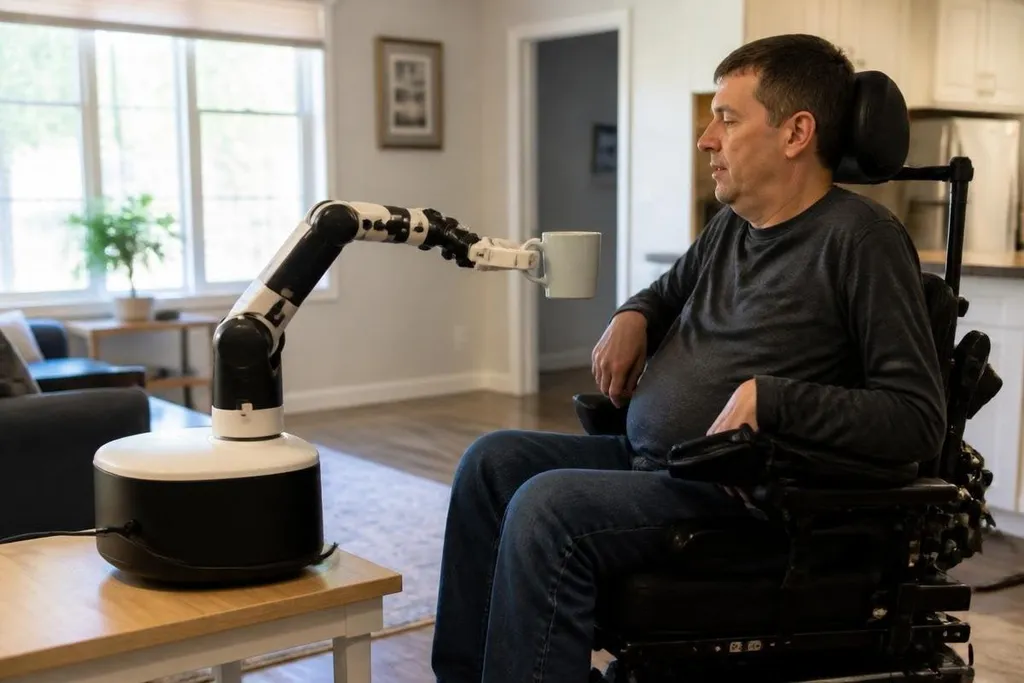
Robots may help with tasks that need strength, reach, balance, or repeated movement. For example, a mobile robot could carry an item across a home. Mounted to a chair or table, a robotic arm could pick up a phone, open a drawer, or bring food closer.
Those tasks matter because they can reduce the number of times a person needs to ask another person for help. That does not mean every user wants a robot in their home. Some people may prefer a simple tool, a human aide, or a change to the room instead.
Mobility support is another area. A robot could help move an object out of a path, guide a person through a building, or carry a bag while a wheelchair user moves between rooms. The robot would need to sense people, furniture, doorways, and floor changes before it acts.
Control matters more than motion
A robot can move well and still be hard to use. The control system must match the person using it. Some users may choose speech. Others may need a switch, a joystick, eye tracking, head movement, or a mix of inputs.
The system also needs a clear way to show what it plans to do. A person should be able to stop an arm before it reaches a fragile object or cancel a command that the robot heard incorrectly. A large physical stop button can matter more than a long list of software features.
This is where personal choice becomes a design test. A robot that takes over a task without a clear pause or stop function may reduce control instead of adding it.
Dated reports on assistive robotics from Robot24.com can show which systems have reached testing and what users can control before the next section examines their practical limits.
The limits are practical
Home robots work in spaces that change. A chair may move, a pet may cross the room, or a delivery box may block a doorway. A system that works in a test room may need more sensing and better error handling in a real home.
Cost is another barrier. The price of the robot is only one part of the bill.
You may also need a mount, software updates, training, repairs, batteries, and changes to the home. If a system stops working, the user needs a manual way to finish the task.
Privacy needs attention too. Cameras and microphones can collect details about a person’s movements, health, visitors, and daily routine. Before buying, check what data the robot records, where it goes, and how long the company keeps it.
Evidence also matters. Without a named product, measured trial, or published source, nobody can say how much independence robots will create for disabled people as a group. The useful question is narrower: which task, for which person, in which place, under what conditions?
A buying and design checklist
Use these points when you assess an assistive robot:
- Name the task: Write down the exact movement or job you want help with.
- Check control options: Confirm that the robot accepts the input method you can use reliably.
- Test failure recovery: Find out what happens after a missed command, blocked path, or low battery.
- Measure the space: Check door widths, turning room, table height, and storage space.
- Ask about upkeep: Get the cost and process for repairs, batteries, software, and training.
- Protect your data: Read the camera, microphone, storage, and account settings before use.
I'd skip any robot that requires the user to trust a demo instead of testing the task in their own space.
The next useful step is a small trial with one task, one room, and a clear way to stop the robot. That test can show whether the system adds control or adds another problem to manage.